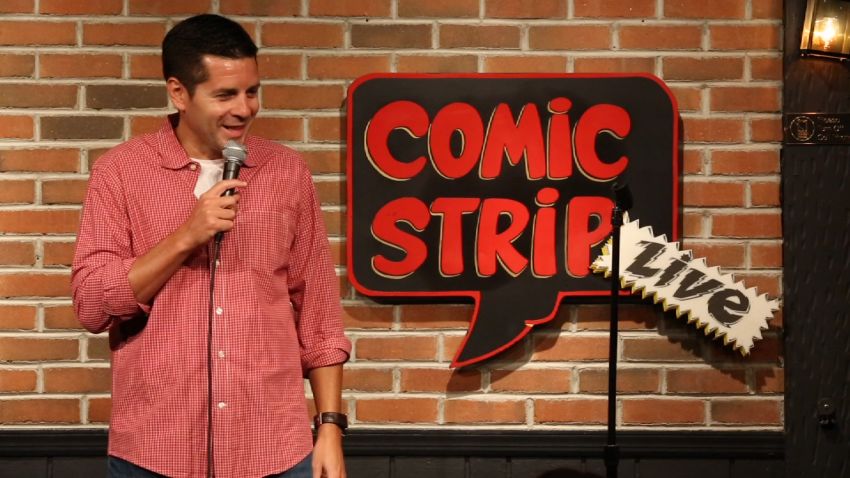
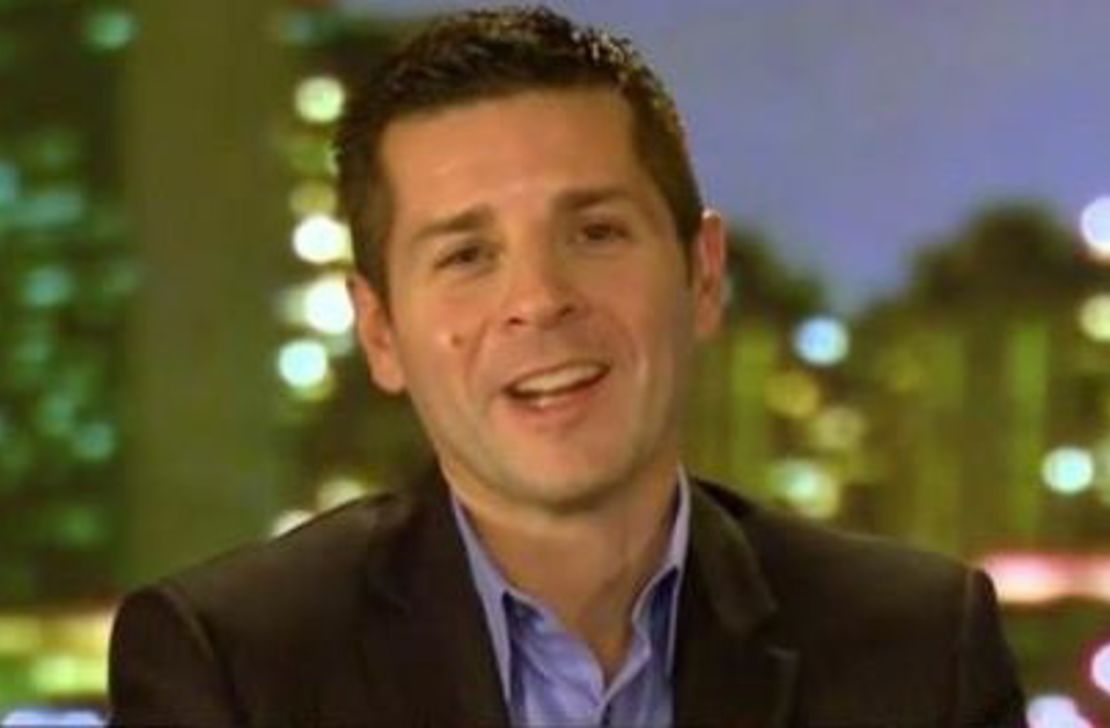
Editor’s Note: Dean Obeidallah, a former attorney, is a political comedian and frequent commentator on various TV networks including CNN. He is the editor of the politics blog “The Dean’s Report” and co-director of the upcoming documentary “The Muslims Are Coming!” Follow him on Twitter: @deanofcomedy
Story highlights
Dean Obeidallah: As an experiment, I didn't use my cell phone for a whole day
Obeidallah: At first I felt liberated, but then I worried that I was missing important e-mails
He wondered if we would talk to each other more if we're not hooked to technology
Obeidallah: I realized that without my cell phone, I felt unconnected to the world
There are millions of cell phone users in the United States. But one day last week, there was one less: Me.
My CNN editors asked me to participate in an experiment where I won’t use my cell phone for one whole day. I thought: How hard could it be? I know many of you, like myself, are old enough to remember America B.C., as in “Before Cell phones.” We made it through just fine.
Special series: Our mobile society
So off I went into the streets of New York City sans a cell phone. At first, I felt liberated, like Neo in “The Matrix” when he took the red pill and could finally see the “real world.”
Instead of texting or checking my e-mail, I began to actually look at the people I was sharing the streets with. It truly resembled a movie set filled with extras from all walks of life. A beautiful woman walked quickly past me while fixing her make up. Asian tourists were busy snapping photos. A businessman looked busy talking on his phone. A group of Hasidic men were kibitzing while an Arab man sold falafel from a cart.
It was truly exhilarating. For about 14 or 15 minutes or so. After that, I began to worry: What if someone needs to reach me? What if there is an important message waiting for me?
Opinion: Do you remember your mom’s phone number?
Being a stand up comedian, I run a unique small business. I’m not only president of my company; I’m also the only product. While I have an agent, I still need to be able to respond quickly to certain booking offers or just move on to the next comic opportunity.
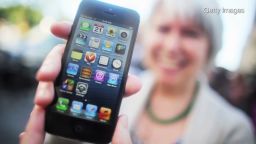
I soon began to feel phantom cell phone vibrations in the front left pocket of my jeans where my phone usually resides. My stress level started to escalate. I had to check my voice mail. But doing so would require me to engage in an activity I had not done for many years: Use a payphone.
While there’s no short supply of pay phones in the Big Apple, there’s apparently no one charged with cleaning them. The pay phones I saw looked and smelled like homeless people had confused them for bathrooms or had used them to clean certain parts of their anatomy.
Despite the stench, I held my breath and made my call to retrieve my messages. How many did I have? Zero. This instantly took me back to memories of life in B.C. America when I would call my answering machine to retrieve messages and often be met with the (gleeful) robotic voice stating, “You have no new messages.”
Have smartphones killed boredom (and is that good)?
While relieved, my anxiety over my unchecked emails began to ratchet up. Please keep in mind I’m a NYC comedian. I’m hyper neurotic by nature.
I needed to find an Internet café. Sounds simple enough. But it’s not. While establishments offering free Wi-Fi are everywhere, venues with computer terminals to use are not.
I began walking the streets asking people if they had seen an Internet café, like I was searching for my lost dog. The responses ranged from “no,” to odd looks like I was a time traveler from the 1990s, to offers of stories on unrelated topics. (One man had no idea where an Internet café was located but enthusiastically suggested a great Turkish restaurant that I should check out.)
Fourteen blocks, two avenues and 45 minutes later, I finally observed a sign outside a slightly run-down deli that read, “Internet.” And there I saw three computer terminals, whose best days were clearly behind them, available for rent at the reasonable rate of $2 for 12 minutes.
So what e-mails had I missed? Nothing pressing, to be honest. They all could have waited until I returned home.
Photos: Re-enacting a simpler time
As my cell phoneless day continued, I began to wonder: Would we actually talk to each other more if we weren’t so attached to our gadgets? Would we be better people without our cell phones distracting us so often? Better spouses? Better sons or daughters?
But I also realized that without my cell phone, I felt unconnected to my friends, my business, and the world. I began to feel lonely in the most crowded city in America.
Riding the subway home later that day, and without my beloved baseball game to play on my phone, I had time to really look around the subway car. And there I made a startling discovery: I had never read the emergency evacuation sign posted in each subway car. That knowledge could very well save my life one day.
My experiment without a cell phone taught me two valuable lessons. One, my cell phone is not just a piece of technology; it is like Linus’ security blanket in the “Peanuts” comic strip. Without it, I felt less comfortable. Less confident. I felt alone.
And two, in case of fire in the subway, don’t panic. Wait for instructions from the train conductor. Help is on the way.
Follow us on Twitter @CNNOpinion
Join us on Facebook/CNNOpinion
The opinions expressed in this commentary are solely those of Dean Obeidallah.