
Planet of sound: Meteor blast resonated around Earth
By Matt Smith, CNN
February 28, 2013 -- Updated 1537 GMT (2337 HKT)
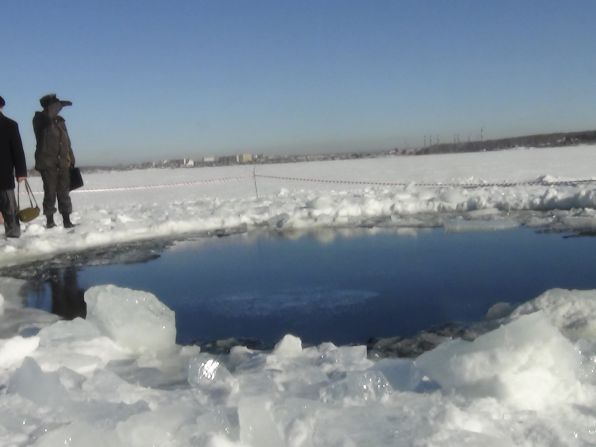
A large chunk of a meteor that exploded over Russia is found in a lake on Friday, February 15.
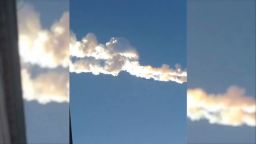
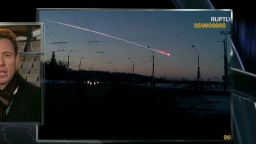
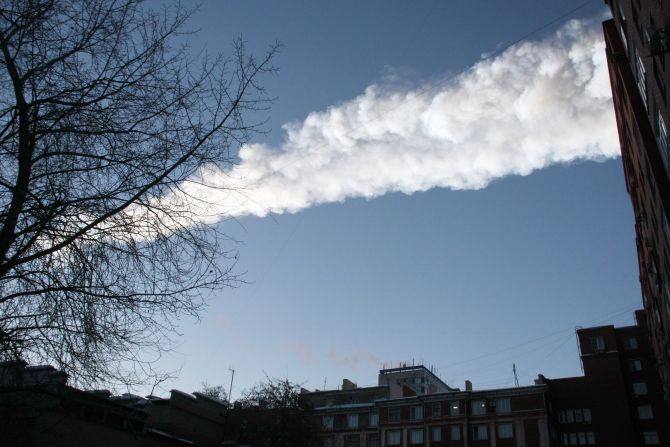
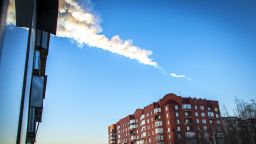
A meteor streaks through the sky before exploding with a flash and boom that shattered glass in buildings and left hundreds of people hurt.
Workers repair a damaged power line near the wall of a local zinc plant. About 270 buildings were damaged -- mostly broken glass -- by shock waves caused by the blast, said Vladimir Stepanov of the National Center for Emergency Situations at the Russian Interior Ministry.
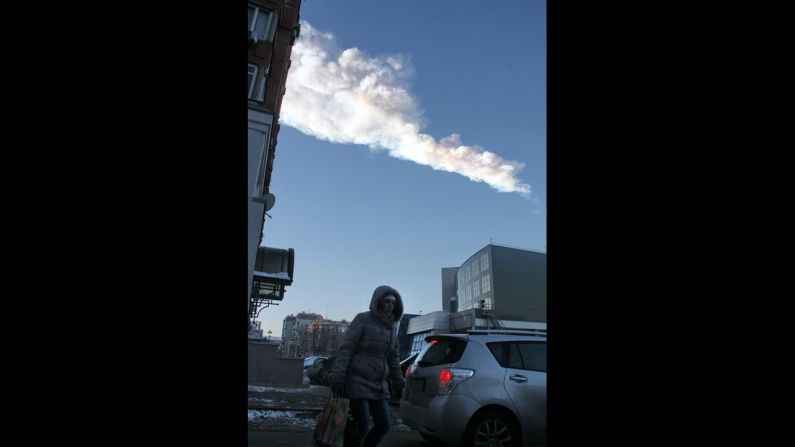
The meteor leaves a white streak through the sky. The national space agency, Roscosmos, said scientists believed one meteoroid had entered the atmosphere, where it burned and disintegrated into fragments, according to RIA Novosti.
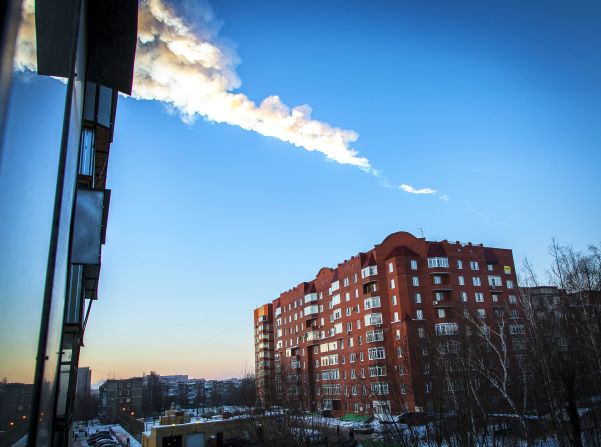
The meteor's vapor trail passes over the city.
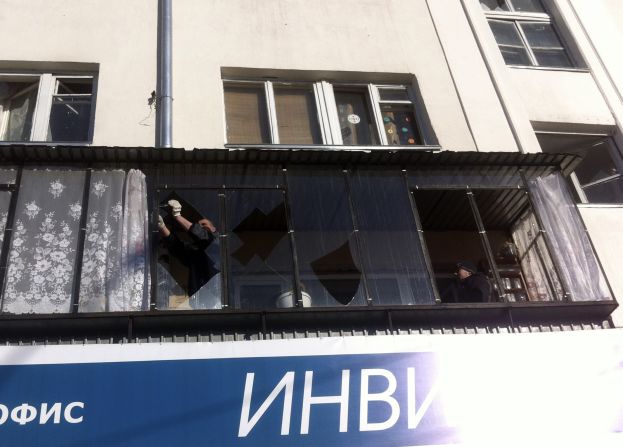
A man removes shards of glass from the frame of a broken window.
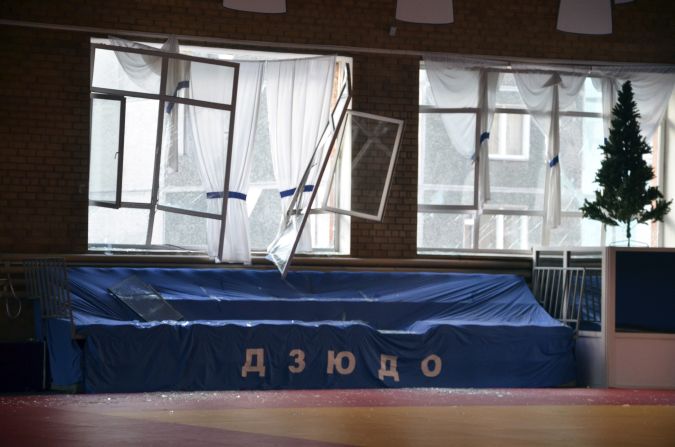
The meteor damaged windows at a sports hall.
By noon Russia time more than 725 people had sought medical help.
Meteor explodes over Russia
STORY HIGHLIGHTS
- Nuclear test sensors picked up meteor's sound wave as far away as Antarctica
- Scientists used that sound to calculate the size of the space rock
- Meteor created boom over Russia
(CNN) -- The meteor that exploded over the steppes of southwestern Russia sent a low-frequency rumble bouncing through the Earth, giving scientists new clues about the biggest cosmic intruder in a century.
The big boom over Chelyabinsk on February 15 also produced a wave of sound thousands of times lower than a piano's middle C -- far below the range of human hearing, according to the international agency that watches for nuclear bomb tests. The Comprehensive Test Ban Treaty Organization said that sound wave showed up on sensors from Greenland to Antarctica, making it the largest ever detected by its network.
Scientists then used that wave to calculate the size of the small asteroid that plunged to Earth, said Margaret Campbell-Brown, an astronomer at Canada's University of Western Ontario.
The duration of the wave -- about 32 seconds -- let scientists estimate the energy of the blast at between 450 and 500 kilotons, the size of about 30 early nuclear bombs
Meteor streaks through Russian skies
Russian meteor was like 'a rocket bomb'
Over 100 tons of material falls daily
From there, Brown said, they could calculate the size of the fireball; and using an estimate of the meteor's speed from the numerous dashboard and mobile-phone cameras that captured the scene, it was "first-year physics" to figure out the approximate size and weight, she said.
The latest estimate is that the Chelyabinsk meteor was about 56 feet (17 meters) across, weighed more than 7,000 tons and was moving about 18 kilometers per second (40,000 mph) when it blew apart, she said.
Opinion: A meteor and asteroid: 1 in 100 million odds
"In terms of things we have observed, this is the largest since Tunguska," Brown said, referring to the suspected meteor that flattened a Siberian forest in 1908.
The nuclear test monitors pick up "infrasound", or low frequency, waves from about 20 meteors a year -- "if conditions are right, perhaps as small as a pea," she said.
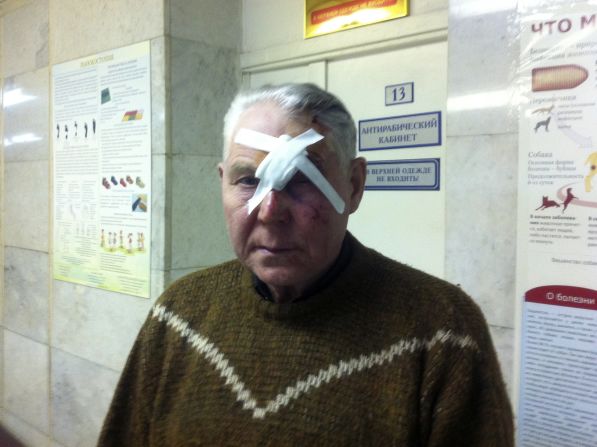
Russian authorities say more than 1,500 people were hurt, mostly by flying glass, when the Chelyabinsk meteor exploded in spectacular fashion. Amateur video footage showed a bright white streak moving rapidly across the sky before exploding with an even brighter flash and a deafening bang.
Bill Cooke, head of NASA's Meteoroid Environment Office, said scientists believe the object originated in the asteroid belt between Mars and Jupiter. It was the Apollo group of asteroids, which circle the sun in oblong orbits, that occasionally cross Earth's.
Cooke said scientists expect to study the Chelyabinsk event for months. But the dozens of fragments that have been found so far point to a fairly common, stony asteroid with traces of nickel and iron.
"The composition is not at all unusual as far as meteorites go," he said. "It was just very big."
More space and science news on CNN's Light Years blog
Part of complete coverage on
May 23, 2013 -- Updated 0227 GMT (1027 HKT)
The nature of the London attack is not unprecedented, says one terror analyst. There's a track record of Islamist extremists targeting soldiers in the West.
May 21, 2013 -- Updated 2217 GMT (0617 HKT)
The image of the Gaza boy and his father under a hail of Israeli bullets became a powerful symbol. Now Israel insists its military is not to blame.
May 22, 2013 -- Updated 1831 GMT (0231 HKT)
The tornado that ripped through Oklahoma saw teachers rise to be surrogate parents, protectors and heroes, according to LZ Granderson.
May 21, 2013 -- Updated 1714 GMT (0114 HKT)
Did you know that hurricanes can also produce tornadoes? Read facts you didn't know about destructive twisters.
May 22, 2013 -- Updated 1301 GMT (2101 HKT)
The petite frame of 19-year-old Zoe Smith should fool nobody -- she's a weightlifting warrior who has fought stereotypes and broken a British record.
May 22, 2013 -- Updated 0441 GMT (1241 HKT)
Prime Minister Shinzo Abe calls women "Japan's most underutilized resource," yet traditions have been hard to overcome.
May 22, 2013 -- Updated 1455 GMT (2255 HKT)
According to the United Nations' mission in Iraq, 712 Iraqis were violently killed in April 2013. This is both normal and extraordinary.
May 22, 2013 -- Updated 1121 GMT (1921 HKT)
Myanmar's Muslims have generally coexisted with the Buddhist majority. But ethnic fault lines are exposed as it emerges from military rule.
May 23, 2013 -- Updated 0221 GMT (1021 HKT)
A quarter century after his death, American pop artist Andy Warhol has popped up in China again after his first and only trip to the country in 1982.
May 22, 2013 -- Updated 1439 GMT (2239 HKT)
Revolutionary bionic exoskeletons like the metal suit worn by comic book hero Tony Stark may be closer than you think.
Today's five most popular stories